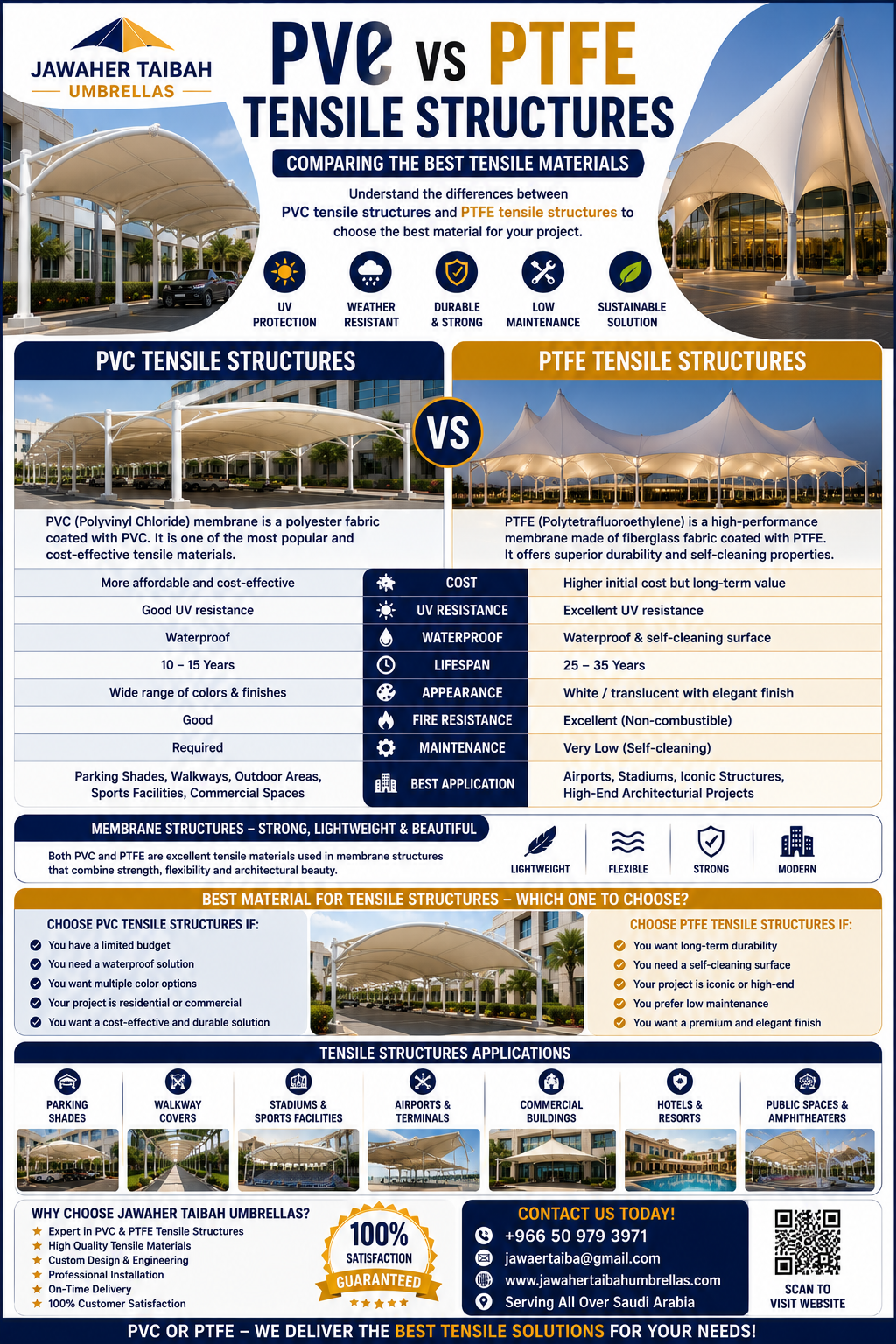
PVC vs PTFE Tensile Structures: Which Is the Best Material for Tensile Structures?
Choosing the right membrane material is one of the most important decisions when designing a tensile structure. Whether you are planning a car parking shade, walkway canopy, sports facility, airport roofing, commercial entrance, or architectural landmark, the material you choose directly affects durability, appearance, maintenance, lifespan, and overall project cost.
Among all tensile materials, PVC tensile structures and PTFE tensile structures are the two most widely used options worldwide. Although both are classified as membrane structures, they are designed for different applications and budgets.
At Jawaher Taibah Umbrellas, we design and install both PVC and PTFE tensile structures across Saudi Arabia. This guide explains the differences, advantages, disadvantages, applications, and helps you determine the best material for tensile structures based on your project requirements.
What Are Membrane Structures?
Membrane structures are lightweight architectural systems made from high-strength fabric membranes supported by steel cables and structural frames. Instead of relying on heavy concrete roofs, tensile membrane structures distribute loads through tension, allowing large areas to be covered with minimal structural weight.
These structures are widely used because they provide:
- Modern architectural appearance
- Large column-free spaces
- Excellent weather protection
- Faster construction
- Lower structural weight
- Energy-efficient designs
- Flexible architectural shapes
The performance of a membrane structure largely depends on the tensile fabric selected.
What Are PVC Tensile Structures?
PVC tensile structures use polyester fabric coated with Polyvinyl Chloride (PVC). This is one of the most popular tensile membrane materials due to its affordability, versatility, and reliable performance.
PVC membranes are available in different thicknesses, colors, and finishes, making them suitable for residential, commercial, and industrial applications.
Main Features of PVC Tensile Structures
- Lightweight construction
- Waterproof membrane
- UV resistant
- Flexible designs
- Cost-effective solution
- Easy installation
- Wide color selection
- Suitable for medium and large projects
PVC remains the preferred material for projects requiring excellent performance at a competitive price.
What Are PTFE Tensile Structures?
PTFE tensile structures are manufactured using fiberglass fabric coated with Polytetrafluoroethylene (PTFE). PTFE is considered one of the highest-performance tensile membrane materials available today.
It is commonly used in iconic architectural projects where long lifespan, premium appearance, and minimal maintenance are essential.
Main Features of PTFE Tensile Structures
- Extremely high tensile strength
- Self-cleaning surface
- Excellent UV resistance
- Outstanding fire resistance
- Long service life
- Elegant translucent finish
- High structural stability
- Minimal maintenance
Although PTFE requires a higher initial investment, it provides exceptional long-term value.
PVC vs PTFE Tensile Structures: Detailed Comparison
1. Material Composition
PVC
- Polyester fabric
- PVC coating
- Protective lacquer finish
PTFE
- Fiberglass fabric
- PTFE coating
- Premium architectural membrane
Winner: PTFE
2. Durability
PVC membranes typically last between 10–20 years, depending on fabric quality and environmental conditions.
PTFE membranes generally last 25–35 years or even longer with proper installation.
Winner: PTFE
3. Cost
PVC is significantly more affordable than PTFE.
For projects with limited budgets, PVC offers excellent value.
PTFE has a higher initial cost due to advanced materials and manufacturing processes.
Winner: PVC
4. Appearance
PVC offers many colors and design options.
PTFE provides a premium white translucent finish that creates beautiful natural lighting during the day and stunning illumination at night.
Winner: PTFE
5. UV Resistance
Both materials provide excellent UV protection.
However, PTFE performs better over decades of continuous sun exposure.
Winner: PTFE
6. Waterproof Performance
PVC is completely waterproof.
PTFE is also waterproof and includes self-cleaning properties that reduce dirt accumulation.
Winner: PTFE
7. Fire Resistance
PVC offers good fire resistance depending on the fabric specification.
PTFE is naturally non-combustible and provides superior fire performance.
Winner: PTFE
8. Maintenance
PVC requires periodic cleaning.
PTFE’s non-stick surface allows rainwater to naturally wash away dirt.
Winner: PTFE
9. Weight
Both are lightweight compared to traditional roofing systems.
PVC is generally lighter.
Winner: PVC
10. Installation
PVC structures are easier and faster to fabricate and install.
PTFE installations require greater engineering precision and specialized fabrication.
Winner: PVC
Comparison Table
| Feature | PVC Tensile Structures | PTFE Tensile Structures |
|---|---|---|
| Initial Cost | Low | High |
| Lifespan | 10–20 Years | 25–35+ Years |
| UV Resistance | Excellent | Outstanding |
| Waterproof | Yes | Yes |
| Fire Resistance | Good | Excellent |
| Maintenance | Moderate | Very Low |
| Appearance | Multiple Colors | Premium White |
| Self-Cleaning | No | Yes |
| Installation | Faster | More Complex |
| Best For | Residential & Commercial | Landmark & Premium Projects |
Advantages of PVC Tensile Structures
- Affordable pricing
- Flexible architectural designs
- Multiple color choices
- Waterproof membrane
- Excellent weather resistance
- Quick installation
- Low structural weight
- Suitable for most commercial applications
Advantages of PTFE Tensile Structures
- Longest lifespan
- Premium architectural appearance
- Self-cleaning surface
- Superior UV resistance
- Outstanding fire resistance
- Excellent structural stability
- Minimal maintenance
- High long-term value
Applications of PVC Tensile Structures
PVC tensile structures are commonly used for:
- Car Parking Shades
- Walkway Covers
- School Canopies
- Restaurant Shades
- Swimming Pool Covers
- Commercial Buildings
- Residential Villas
- Outdoor Seating Areas
- Playgrounds
- Sports Facilities
Applications of PTFE Tensile Structures
PTFE is widely used for premium projects including:
- Airports
- Stadiums
- Exhibition Centers
- Convention Halls
- Luxury Hotels
- Shopping Malls
- Iconic Buildings
- Public Plazas
- Government Projects
- Large Architectural Landmarks
Which Material Performs Better in Saudi Arabia?
Saudi Arabia experiences:
- Extreme heat
- Intense UV radiation
- Dust storms
- High temperatures
- Occasional heavy rainfall
Both PVC and PTFE perform well in these conditions when manufactured using premium materials.
PVC is an excellent choice for most residential and commercial projects due to its affordability.
PTFE is recommended for prestigious developments where durability, appearance, and long-term performance are priorities.
How to Choose the Best Material for Tensile Structures
Choose PVC Tensile Structures if:
- You have a limited budget.
- You need fast installation.
- Your project is residential or commercial.
- You want multiple color options.
- You require a cost-effective solution.
Choose PTFE Tensile Structures if:
- You want maximum durability.
- Your project is iconic or premium.
- You need a lifespan of over 25 years.
- You prefer minimal maintenance.
- Architectural aesthetics are a priority.
Why Choose Jawaher Taibah Umbrellas?
Jawaher Taibah Umbrellas provides complete tensile structure solutions across Saudi Arabia.
We offer:
- Custom Engineering
- PVC & PTFE Tensile Structures
- Premium Membrane Materials
- Structural Design
- Fabrication
- Professional Installation
- Maintenance Services
- Competitive Pricing
- Experienced Technical Team
- 100% Customer Satisfaction
Frequently Asked Questions (FAQs)
1. Which is better, PVC or PTFE tensile structures?
PTFE offers a longer lifespan, better fire resistance, and lower maintenance, while PVC is more affordable and ideal for most residential and commercial projects.
2. What is the lifespan of PVC tensile structures?
High-quality PVC tensile structures typically last between 10 and 20 years, depending on environmental conditions and maintenance.
3. How long do PTFE tensile structures last?
PTFE tensile structures generally last 25 to 35 years or more, making them one of the most durable membrane materials available.
4. Are PVC tensile structures waterproof?
Yes. PVC-coated membranes are fully waterproof and provide excellent protection from rain and harsh weather.
5. Why is PTFE more expensive than PVC?
PTFE uses fiberglass fabric with a premium coating that offers exceptional durability, self-cleaning properties, and a significantly longer lifespan, resulting in a higher initial cost.
6. Which material requires less maintenance?
PTFE requires less maintenance because its non-stick surface naturally sheds dirt and dust during rainfall.
7. Which material is best for car parking shades?
PVC is generally the preferred choice for car parking shades due to its affordability, flexibility, and excellent weather resistance.
8. Can both materials withstand Saudi Arabia’s climate?
Yes. Both PVC and PTFE tensile materials are designed to perform well under Saudi Arabia’s extreme heat, UV exposure, and demanding weather conditions when installed professionally.
Conclusion
Both PVC tensile structures and PTFE tensile structures are excellent tensile materials used in modern membrane structures. The right choice depends on your project’s budget, design requirements, expected lifespan, and maintenance preferences.
For cost-effective residential and commercial projects, PVC offers exceptional value. For landmark developments and premium architectural applications, PTFE provides unmatched durability, aesthetics, and long-term performance.
If you are unsure which option is right for your project, the experts at Jawaher Taibah Umbrellas can help you select the best material for tensile structures based on your specific needs.
Contact Jawaher Taibah Umbrellas
📞 Call / WhatsApp: +966 50 979 3971
📧 Email: jawaertaiba@gmail.com
🌐 Website:
https://jawahertaibahumbrellas.com/
📍 Google Business:
https://share.google/Wdqy7FzxkTgWK1gPu
📝 Visit Our Blog:
https://jawahertaibahumbrellas.com/blog/
⭐⭐⭐⭐⭐ Customer Review
Get in touch today for professional consultation, custom designs, and premium tensile structure solutions across Saudi Arabia.